
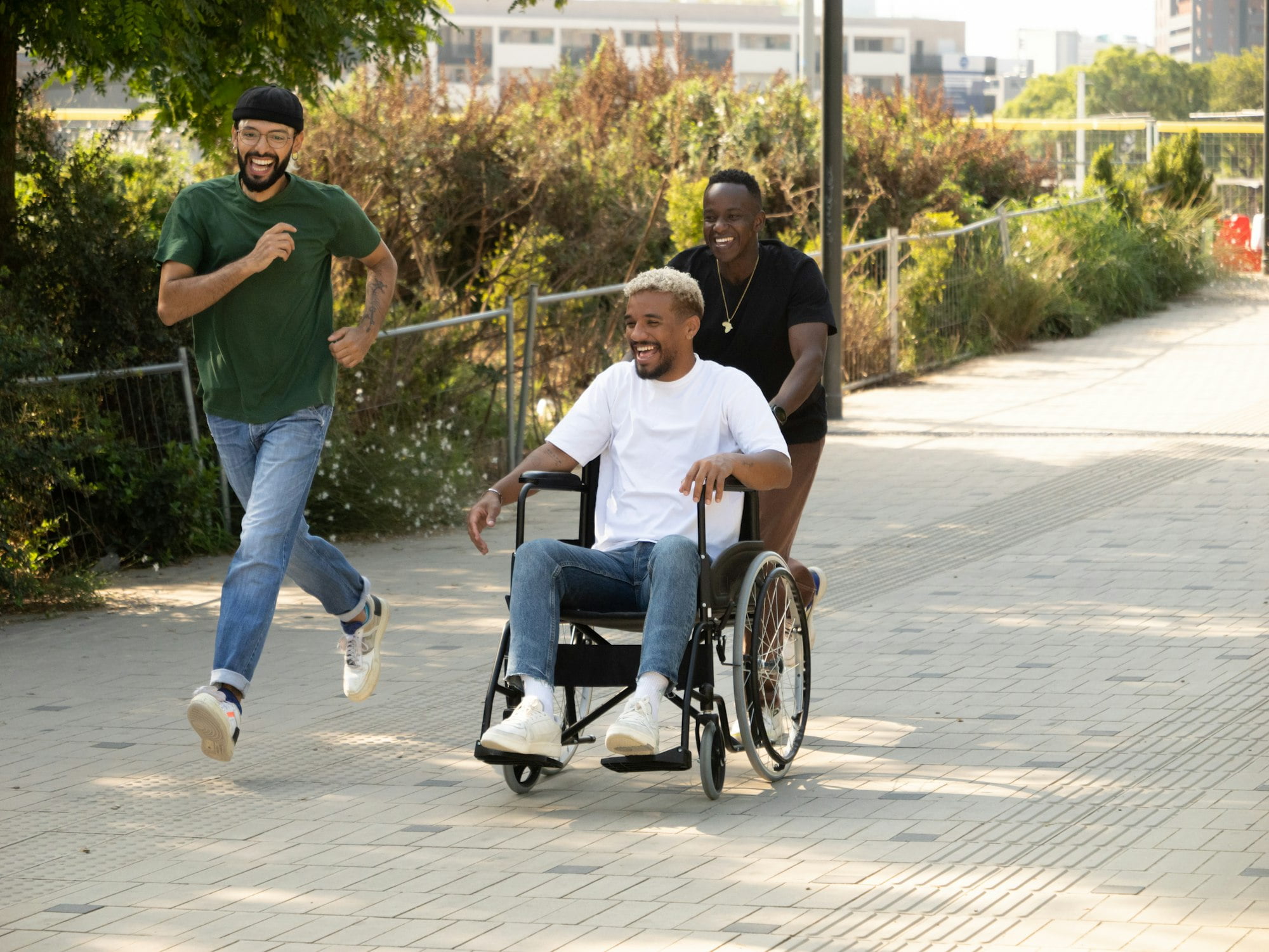
In today's educational landscape, accessibility is not just a buzzword but a necessity. It is a fundamental human right and an essential prerequisite for inclusive learning. At Lernimpuls Witten e.V., we are actively committed to an accessible educational landscape in which all learners – regardless of physical, intellectual, or social limitations – have equal opportunities. In this blog post, we would like to explain how we promote accessibility in education and what measures and initiatives we take to make inclusive learning possible.
What does accessibility in education mean?
Accessibility in education means that educational institutions and learning environments are designed to be accessible and usable for all people – regardless of disabilities, language barriers, or other limitations. This includes physical accessibility, such as access to buildings and rooms, but also digital accessibility, which ensures that all learning materials and online resources are accessible to people with different abilities.
Why is accessibility in education important?
Accessibility in education is crucial for ensuring equal opportunities. People with disabilities often encounter obstacles that limit their learning opportunities. These obstacles can be physical in nature, such as inaccessible classrooms, but also social or cultural, such as prejudices or a lack of understanding. Without accessibility, a large part of society remains excluded from participation in the education system, which leads to long-term social and economic disadvantages.
Measures and initiatives to promote an accessible educational landscape
Lernimpuls Witten e.V. has made it its mission to promote accessibility in education. We achieve this through a variety of measures and initiatives that ensure every learner, regardless of their individual needs, has access to high-quality education.
1. Adapting the physical infrastructure
A central aspect of accessibility in education is the physical accessibility of educational institutions. At Lernimpuls Witten e.V., we have taken measures to ensure that our premises are accessible to people with different physical limitations. This includes:
- Wheelchair-accessible entrances : All our buildings are equipped with ramps and elevators that allow wheelchair users to move around freely and independently.
- Accessible sanitary facilities : Our sanitary facilities are designed so that they can be used by people with different needs.
- Special learning rooms : We offer special learning rooms for people with sensory needs, who, for example, depend on a quiet environment.
2. Digital accessibility
In an increasingly digitalized world of education, the accessibility of online learning platforms and digital resources is essential. Lernimpuls Witten e.V. relies on digital accessibility through:
- Accessible websites : Our website is designed according to the Web Content Accessibility Guidelines (WCAG). This includes providing text alternatives for images, using clear and simple layouts, as well as the ability to individually adjust font sizes and contrasts.
- Subtitles and sign language : Our online courses and video tutorials are provided with subtitles, and we also offer content in sign language to make them accessible to deaf and hard-of-hearing learners.
- Software compatibility : Our digital learning materials are compatible with screen readers and other assistive technologies, so that they can also be used by people with visual impairments.
3. Inclusive teaching methods
In addition to adapting the infrastructure and digital resources, we place great value on inclusive teaching methods that meet the individual needs of learners. These include:
- Differentiated instruction : Our teachers are trained to design teaching materials and methods in such a way that they meet the different learning styles and abilities of the students. This includes, for example, the use of visual aids, tactile learning, and audiovisual media.
- Promoting peer learning : We encourage peer learning, in which students learn from one another and support each other. This promotes not only the understanding of the learning material but also social interaction.
- Individual learning plans : For learners with special needs, we create individual learning plans that emphasize their strengths and help them learn at their own pace.
4. Awareness-raising and training
Another important aspect of our work is raising awareness and training teachers, staff, and students regarding accessibility and inclusion. We offer regular training sessions and workshops to raise awareness of the needs of people with disabilities and to break down prejudices. This includes:
- Training for teachers : Our teachers receive continuing education in inclusive teaching methods and learn how to remove barriers and create a supportive learning environment.
- Workshops for students : We organize workshops for students to promote awareness of diversity and inclusion. In doing so, they learn how they can support their fellow students with disabilities.
- Public relations : Through public relations and campaigns, we advocate for strengthening awareness of the importance of accessibility in education beyond our institution as well.
5. Collaboration with experts and organizations
In order to develop the best solutions for accessible learning, we work closely with experts and organizations that specialize in inclusion and accessibility. This collaboration enables us to always stay up to date with the latest research and to integrate innovative approaches into our educational offerings.
- Partnerships : We have established partnerships with organizations such as the German Federation of the Blind and Partially Sighted (DBSV) and the Federal Association for People with Physical and Multiple Disabilities (bvkm). These cooperations help us to better understand specific needs and to implement targeted measures.
- Expert consultation : Regular consultation with accessibility experts supports us in continuously improving our facilities and offerings.
- Exchange of best practices : Within networks and specialist conferences, we exchange ideas with other educational institutions about proven practices and innovations in accessibility.
Conclusion: Together for an accessible educational landscape
Accessibility in education is an ongoing process that requires continuous effort and collaboration. At Lernimpuls Witten e.V., we are firmly determined to do our part by taking measures and initiatives that make inclusive learning possible. We believe that every person has the right to education – without barriers and limitations.
Our efforts focus on removing physical and digital barriers, promoting inclusive teaching methods, raising awareness of inclusion, and developing innovative approaches through partnerships with experts and organizations.
By working together to create an accessible educational landscape, we contribute to shaping a more just and inclusive society in which every individual can develop their full potential.