
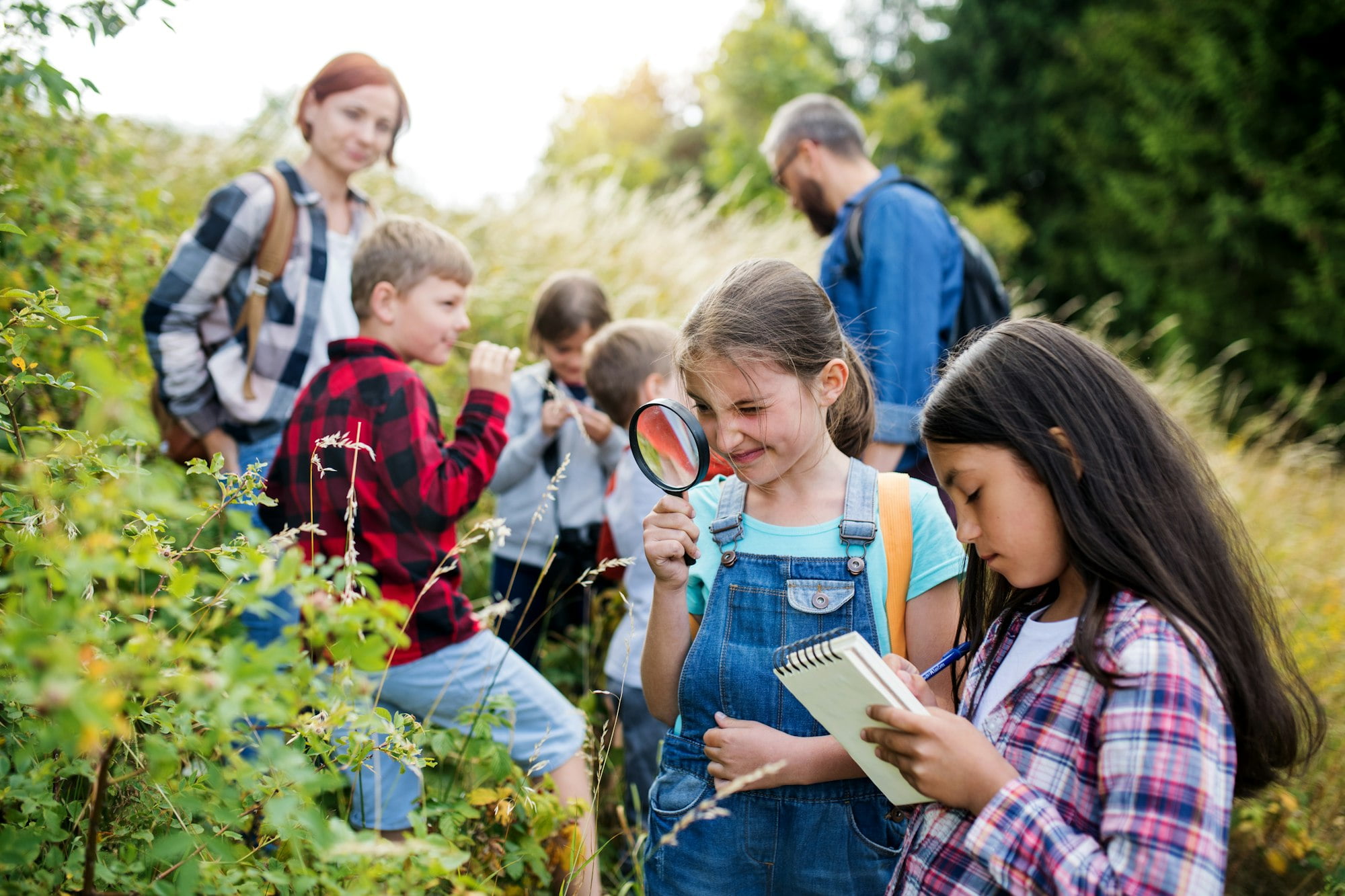
The education system is constantly evolving to meet the demands of the modern world. In this context, the concept of “learning by experiencing“ is becoming increasingly important. Particularly worth highlighting here is the importance of excursions and out-of-school learning venues, which serve as an essential complement to traditional teaching. This blog post examines why excursions not only represent a welcome change from everyday school life, but also enable a deeper, more lasting learning experience.
The role of excursions in the educational context
Excursions offer pupils the opportunity to acquire knowledge in a real-world context. They leave the classroom and immerse themselves in a world they otherwise only know from books or stories. This direct encounter with the environment, history, art or the natural sciences promotes understanding and makes learning content more tangible. This is a decisive difference from classic teacher-centred instruction, which is often limited to the theoretical transfer of knowledge.
Why out-of-school learning venues are so important
Out-of-school learning venues, such as museums, historical sites, nature parks or companies, offer a wide range of learning opportunities. These places are often specifically designed to impart knowledge in an interactive and engaging way. Learners can, for example, see how machines work in a technology museum, or examine fossils up close in a natural history museum. Such experiences leave a deep imprint on the memory and support the learning process in a lasting way.
Another advantage of out-of-school learning venues is the opportunity to convey interdisciplinary knowledge. During a visit to an open-air museum, pupils can not only learn historical facts, but also gain insights into the geography, biology and sociology of the corresponding era. This holistic approach strengthens connected thinking and the ability to recognise and understand complex relationships.
Excursions foster social skills
In addition to imparting knowledge, excursions also play a central role in the development of social skills. During an excursion, pupils experience new social dynamics. They have to find their way in unfamiliar situations, work in a team and find joint solutions. This fosters not only the ability to work in a team, but also communication skills and a sense of responsibility.
Excursions also help to strengthen the class community. The shared experiences and challenges weld the group together and create a positive learning atmosphere. Pupils who learn and experience things together outside the school building often develop stronger bonds with one another, which also has a positive effect on the learning climate in the classroom.
Learning by experiencing: sustainability and motivation
The pedagogical added value of excursions lies above all in linking theoretical knowledge with practical experience. Through experiencing, what has been learned is linked with emotional impressions, which deepens understanding and increases retention. This form of “learning by experiencing“ is not only more lasting, but also boosts pupils' intrinsic motivation. When they realise that what they are learning is actually applicable in the real world, they are more willing to engage actively and with interest in their lessons.
The challenge of organising excursions
Despite their many advantages, excursions are also associated with challenges. Organising them requires a great deal of time and effort on the part of teachers. Suitable destinations must be selected, safety precautions taken and logistical aspects such as transport and catering clarified. Funding can also pose an obstacle, especially when it comes to longer or more elaborate outings.
Despite these challenges, the added value that excursions offer should not be underestimated. Many schools and educational institutions, such as Lernimpuls Witten e.V., therefore actively strive to integrate excursions into their curriculum and to offer pupils these valuable learning opportunities on a regular basis.
Best practices for successful excursions
To ensure the success of an excursion, a few best practices should be observed. Thorough preparation is essential. Teachers should engage intensively with the aim of the excursion and embed the visit well into their lessons. This can be done through preparatory lessons, in which learners receive basic information, and follow-up lessons, in which what has been experienced is reflected upon and deepened.
It is also important to actively involve pupils in the planning. They could, for example, have a say in the choice of destination or take on certain tasks during the excursion. This increases engagement and identification with the outing.
Another aspect that contributes to the success of an excursion is close cooperation with the out-of-school learning venues. Many institutions offer special programmes for school classes that are didactically prepared and tailored to the needs of the pupils. Teachers should make use of these offers and integrate them into the visit.
Conclusion: excursions as an indispensable complement to teaching
Excursions and out-of-school learning venues are indispensable complements to traditional teaching. They offer pupils the opportunity to learn by experiencing, to acquire knowledge in a real-world context and to develop social skills. Despite the organisational challenges, schools and educational institutions should use these valuable educational tools regularly. Because through “learning by experiencing“, not only is understanding fostered, but enthusiasm for learning is also awakened.
For Lernimpuls Witten e.V., excursions and the use of out-of-school learning venues are at the heart of our pedagogical work. We are convinced that through these experiences our pupils grow not only professionally but also personally. That is why we are committed to integrating such learning opportunities into our curriculum on a regular basis, thereby offering the best possible education.
We invite all those interested to embark with us on the exciting journey of learning by experiencing and to discover the world outside the classroom.