
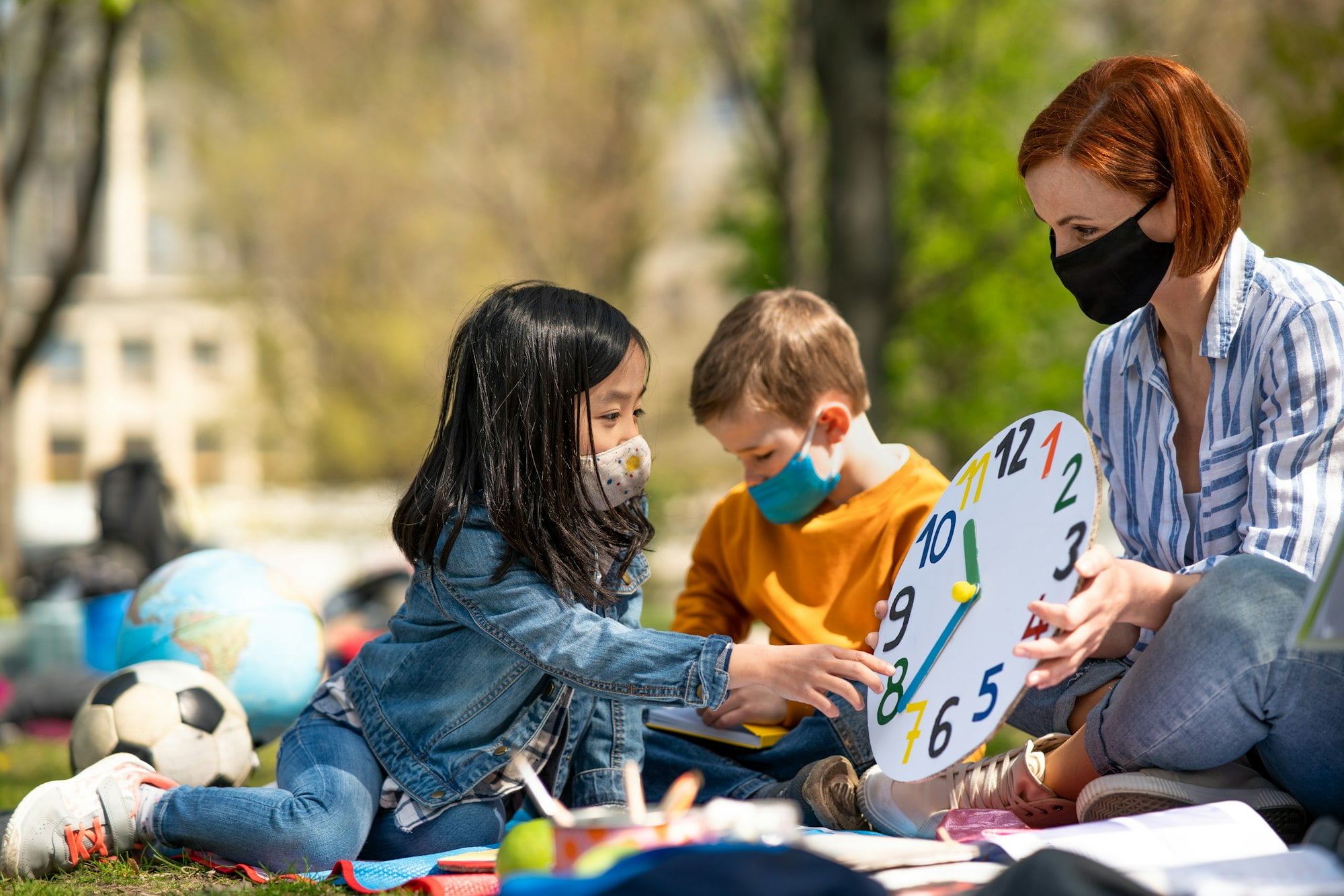
Why teaching outdoors offers an enriching learning experience
In a world increasingly shaped by technology and digital media, the concept of learning in nature seems almost antiquated. Yet it is precisely in this fast-paced and often overstimulated environment that outdoor education, that is, teaching in the open air, offers a welcome and necessary change of pace. Outdoor education combines traditional education with natural settings and offers a wide range of benefits that affect both the cognitive and the emotional development of students. In this article, we explore why outdoor education is an enriching learning experience and what benefits learning in nature brings with it.
What is outdoor education?
Outdoor education, also known as nature-based pedagogy, refers to a form of education that promotes learning in and through nature. Instruction is moved out of the traditional classroom and into natural settings such as forests, parks, gardens, or other outdoor landscapes. In these environments, students are not only taught but also actively involved in exploring and interacting with their surroundings.
Nature thus becomes the classroom, in which students learn through hands-on experiences, observations, and experiments. This kind of learning fosters not only knowledge about nature but also important social, emotional, and cognitive skills.
The benefits of outdoor education
1. Promoting physical health
One of the most obvious benefits of outdoor education is the promotion of physical health. Teaching in the open air generally means more movement. Whether exploring a forest, playing in a field, or carrying out science experiments outdoors, children and young people are physically active. This increased activity not only promotes overall fitness but also contributes to the development of motor skills.
In addition, nature offers fresh air and sunlight, both elements that contribute significantly to health and well-being. Natural light supports the production of vitamin D, which is important for bone health and strengthens the immune system.
2. Improving mental health and well-being
Nature has a calming effect on the mind. Studies have shown that time spent outdoors reduces stress and improves overall well-being. This is especially true for children and young people, who in their daily lives are often confronted with high performance pressure and social stress.
Outdoor education allows students to relax in a less stressful environment, which fosters their ability to concentrate and their emotional balance. The calming effect of nature can also reduce the risk of anxiety and depression and improve overall psychological well-being.
3. Fostering creativity and problem-solving skills
Nature is an unpredictable and complex space that challenges students' creativity and problem-solving skills. Unlike a standardized classroom, nature offers countless opportunities for creative thinking and experimental learning.
Whether it is finding the best path through a densely overgrown area, solving a problem in a science experiment, or creating a work of nature art, outdoor education encourages students to think outside the box and develop creative solutions. This kind of learning fosters the ability to think flexibly and to solve problems in innovative ways.
4. Strengthening social skills and team spirit
Learning in nature is often a communal experience. Activities such as building a shelter, conducting experiments, or exploring the surroundings require collaboration and teamwork. These activities foster the development of social skills such as communication, cooperation, and conflict resolution.
In addition, nature offers an environment in which hierarchies and roles are less rigid than in a traditional classroom. This allows students to take on different roles and to develop their leadership skills. Overcoming challenges together in nature strengthens team spirit and fosters a sense of community.
5. Promoting environmental awareness and appreciation for nature
Outdoor education raises students' awareness of the environment and fosters a deeper understanding of and a greater appreciation for nature. Through direct experiences and observations in nature, students learn about the importance of conservation and sustainability.
Understanding ecological relationships and recognizing how human action affects the environment are essential aspects of a holistic education. By experiencing nature up close, students develop a personal connection to the environment, which often leads to a lifelong commitment to protecting nature.
6. Supporting cross-disciplinary learning
Outdoor education offers an ideal platform for cross-disciplinary learning. Nature and the environment provide countless learning opportunities across various disciplines, from biology and geography to art, mathematics, and physics. A simple walk through the forest can lead to the exploration of the local flora and fauna, while a stream invites experimentation with the laws of physics.
This kind of cross-disciplinary learning helps students make connections between different areas of knowledge and develop a deeper understanding of the learning content. In addition, learning through hands-on experiences and discoveries makes lessons not only more effective but also more exciting and more relevant for students.
7. Fostering independence and self-confidence
Learning in nature gives students the opportunity to strengthen their independence and self-confidence. The challenges that nature offers, whether navigating unfamiliar terrain, mastering physical tasks, or solving problems, require initiative and determination.
These experiences contribute to the development of strong self-confidence, as students learn to use their own abilities and resources. They experience the satisfaction of solving problems independently and mastering challenges, which leads to a strengthened sense of self-worth.
Conclusion: Outdoor education as an enrichment for learning
Learning in nature offers a wide range of benefits that go beyond what can be achieved in a traditional classroom. Outdoor education promotes physical and mental health, strengthens social and emotional skills, and supports creative and cross-disciplinary learning. In addition, it contributes to the development of environmental awareness and a healthy self-confidence.
For educational institutions such as Lernimpuls Witten e.V., outdoor education offers a valuable complement to classic instruction. By encouraging our students to explore nature and to learn within it, we open the door for them to a rich and enriching learning experience that will accompany them throughout their lives.
If you would like to learn more about our programs, or about how we integrate outdoor education into our educational offerings, please feel free to contact us. Together we can foster the natural curiosity and spirit of discovery of our students and help them unfold their full potential.