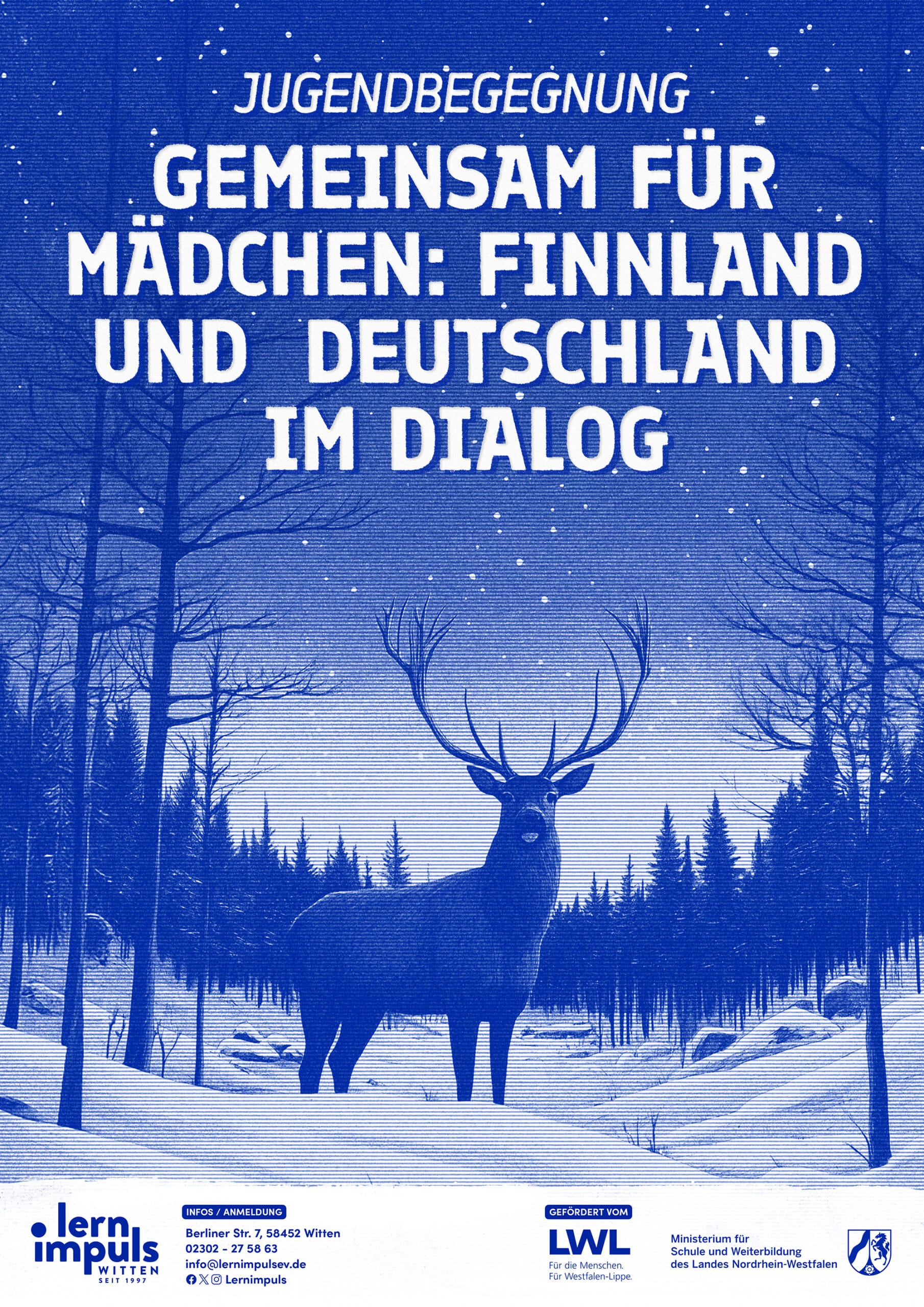
„Hallo Saska“ – Youth Exchange Return Visit
As part of an intercultural exchange project, Finnish and German young people travelled to Witten for seven days to take part together in various educational and leisure activities. The aim of the trip was to give the young people the opportunity to reflect on their own prejudices, deepen democratic values and develop intercultural competencies. The participants from both countries were invited to take an active part in the activities, which included sporting, cultural and linguistic elements alike.
During the exchange, the young people explored the city of Witten together, got to know the club premises of Lernimpuls and took part in various workshops. A highlight of the trip was the visit to the state parliament in Düsseldorf, which gave the young people insights into the political landscape and democratic processes in Germany. Other significant experiences were the visit to the UNESCO World Heritage Site „Essener Zeche“ and an exciting tour of the Ruhr region, during which the participants learned more about the history of the region and the changes brought about by industrialisation.
Particular attention was paid to the young people's practical involvement in ongoing projects of Lernimpuls , where they could apply their newly gained insights directly. The exchange between the young people from Finland and Germany was fostered through daily discussion rounds in which they shared their experiences and learned from one another. The visit to Germany was intended to give the young people not only cultural but also practical impulses for their own youth work in Finland.
At the end of the trip there was a festive farewell gathering, at which the young people reflected on their experiences and celebrated the beginning of a lasting exchange. Two weeks after their return, a virtual follow-up meeting took place in order to deepen the experiences and continue the intercultural dialogue. This project marked the beginning of a long-term partnership, which is to be further expanded through regular exchange opportunities. We would like to sincerely thank the Landschaftsverband Westfalen Lippe (LWL), whose funding made it possible for us to carry out this valuable project.